Solitaire Classic Games
Ample Wise StudioCard
4.4346.00 Reviews
- Version
- 1.28.0
- Installs
- 500.00K
- Age Rating
- Everyone
Screenshots
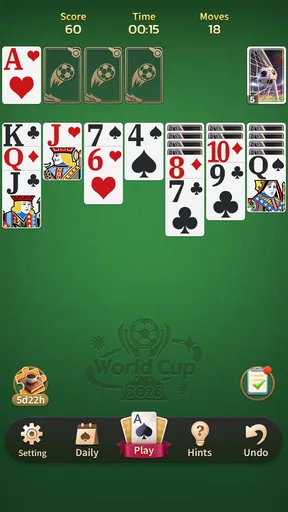
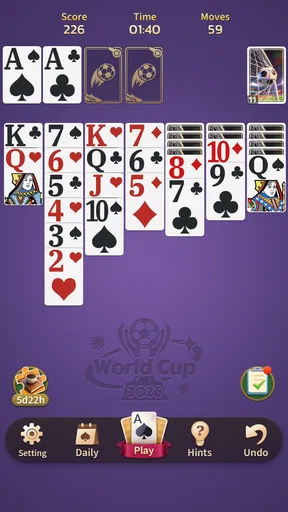
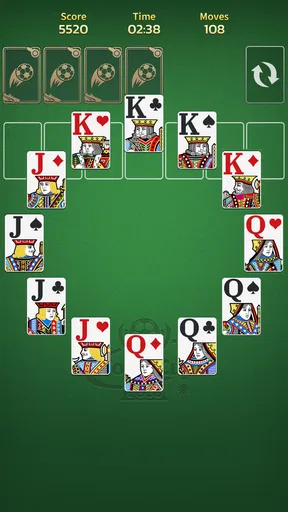
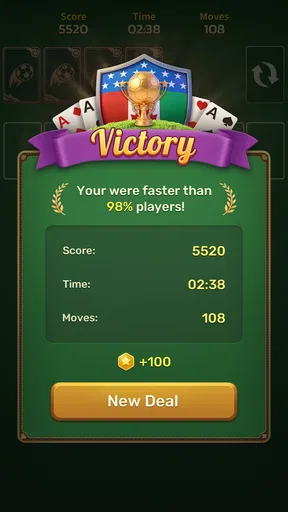

Our Review of Solitaire Classic Games
 Analysis by Appyee
I came away from Solitaire Classic Games with the feeling that it understands why people return to solitaire in the first place. This is a free card game from Ample Wise Studio, built around a familiar, low-pressure way to spend a few quiet minutes. Its store message points to easy play and daily relaxation, and that description matches the general character I experienced: it is not trying to turn a simple card layout into a noisy competition. It gives the classic format room to breathe.
That simplicity is both its strongest quality and the main thing to consider before installing it. If you want a focused solitaire session that works well during a coffee break, while travelling, or before bed, this game makes a sensible first choice. If you need deep strategy, a large collection of card variants, or a strong sense of progression, you may eventually find it too restrained. My review focuses on that balance: how its visual language, sound, pacing, and card mechanics work together rather than treating the game as just another deck on a screen.
A quiet first impression that gets out of the way
The first thing I noticed is how little effort the game asks from the player. Solitaire is already a familiar format, so the useful design decision is not to bury it under instructions. I could approach a round with the expectations I already have for classic solitaire: arrange cards, uncover useful moves, and keep the layout moving without feeling rushed. That makes the game approachable for someone who has not played recently as well as for a regular card-game player.
The presentation supports that first impression. Rather than making the screen feel like a busy arcade menu, the game’s identity is tied to the cards and the act of sorting them. That matters more than it sounds. A solitaire game is often opened when the player wants a small mental reset, and every unnecessary visual interruption works against that purpose. Here, the appeal is in the clean relationship between the play area and the task in front of me.
Because it is free and carries an Everyone content rating, I see it as an easy recommendation for households looking for a straightforward card game rather than an intense or mature experience. It is also a practical option for casual players who do not want to learn a complicated rule set. The current release is version 1.26.1, and the game supports Android starting with version 7.0, which makes it accessible to a broad range of older and newer devices.
The audience response gives the project useful context without changing the experience itself. It has an average rating of 4.6 from around 2.3 thousand ratings, with more than 500 thousand installs. I read that as a sign that the uncomplicated format is reaching the people it is meant for. It does not guarantee that every player will enjoy the same pacing, but it does suggest that the basic promise of a relaxed solitaire game is landing well.
What the opening experience gets right
I like that the game does not need a long commitment before it becomes useful. A round can fit into a short pause, yet the familiar structure gives that pause a little shape. I can start with the intention of playing once and stop when the break is over, or continue if the layout keeps presenting interesting choices. That flexibility is more valuable here than elaborate progression systems would be.
There is also a psychological advantage to the traditional format. The objective is easy to understand, but the next move still requires attention. I am not simply tapping through a predictable sequence. I need to look for cards that open the board, judge whether a move will help later, and avoid using a useful space too early. The game therefore occupies a comfortable middle ground between passive relaxation and demanding concentration.
One limitation appears from the same design choice. Players who expect a dramatic onboarding sequence, a story, or a strong reward loop may find the introduction almost too modest. This is a game that wants to become part of a routine, not a destination that constantly asks for attention. I would skip it if my main reason for downloading a card game were spectacle or a large social layer.
The visual language of a familiar card table
Solitaire works best when the cards remain the visual priority. In my experience, the game’s art direction is most effective when it reinforces recognition: suits, ranks, stacks, and available spaces need to be read quickly, especially on a smaller phone display. The setting feels closer to a calm digital card table than to a themed fantasy world, and that restraint helps the mechanics stay legible.
That choice creates a coherent mood. The game does not need an elaborate setting to create atmosphere because the card table itself becomes the setting. Empty spaces suggest possibilities, covered cards create small moments of curiosity, and completed stacks provide a quiet sense of order. I found that visual progression more satisfying than a decorative background would have been if the decoration made the cards harder to read.
For a player who uses solitaire as a wind-down activity, this visual restraint is a real strength. I can glance at the layout, understand its state, and return to the decision without rebuilding the whole picture in my head. That is especially useful in everyday situations where attention is divided, such as waiting for an appointment or taking a short break between tasks.
There is a trade-off, though. A traditional presentation can feel less distinctive than a heavily themed card game. If you want cards that belong to a particular fictional universe, animated characters, or a changing set of visual environments, this experience may seem plain. I would not describe that as a flaw in isolation; it is a direct consequence of choosing clarity and calm over novelty.
Reading the board instead of chasing decoration
A useful habit is to treat the visual arrangement as a planning tool. I try not to move a card merely because the move is legal. First I look for actions that uncover covered cards or create a useful empty column. That small pause changes the game from random tapping into a more deliberate puzzle. The uncluttered presentation makes this kind of scanning easier because the board communicates its priorities clearly.
Another practical tip is to use the open spaces carefully. In classic solitaire, an empty column can be valuable, but filling it immediately may remove the flexibility needed for a later sequence. I found that the game is more enjoyable when I think of an empty space as a resource rather than a target. This is one of the reasons the simple visual layout has more depth than its relaxed mood first suggests.
The same idea helps when deciding whether this game suits you. If you enjoy spotting patterns and making small tactical choices, the restrained art direction leaves room for that pleasure. If you mainly want a visually rich collectible card experience, the lack of decorative layers may make the sessions feel repetitive sooner.
Sound, silence, and the rhythm of a short session
The game’s mood depends heavily on pacing. Solitaire does not need a rapid stream of events; its rhythm comes from a sequence of small decisions, card movements, and pauses while I inspect the next possibility. That makes it naturally suited to quiet play. The experience feels most coherent when I let the round unfold at its own speed instead of treating every move like a race.
I also appreciate that the audio identity of a solitaire game should remain secondary to the board. In this kind of app, sound works best when it confirms an action without demanding attention. The overall impression is one of a game designed to accompany a calm moment rather than dominate the room. For me, that makes it a better fit for evening use or a shared space than a louder, more theatrical card title.
Players should still consider their own habits. If you prefer a game with energetic music, constant feedback, and rapid rewards, the measured rhythm may feel underpowered. On the other hand, if you often play with your phone on low volume or muted, the core experience remains understandable because the cards carry the meaning. The game does not depend on a dramatic soundtrack to make ordinary moves feel important.
Why the pacing matters more than it first appears
The relaxed tempo creates a useful boundary around a session. I can play one round as a reset after work, or use several rounds as a gentle way to fill a longer wait. That is different from games that are designed to keep me engaged through escalating challenges. Here, the appeal is repetition with variation: the rules stay familiar while the arrangement asks me to reconsider my choices.
That rhythm also makes the game suitable for players who dislike time pressure. I can think through a move instead of reacting immediately, which lowers the barrier for newcomers and makes the experience less tiring for older players. The Everyone rating fits that broad accessibility, although the mental challenge should not be confused with complete passivity. A calm pace still leaves room for mistakes and poor planning.
My main reservation is that a player looking for clear long-term escalation may not find enough change in the basic loop. The game is strongest as a repeatable daily habit, not necessarily as a campaign. I would choose a larger card collection or a more feature-heavy alternative if my priority were discovering new rules rather than settling into one dependable form of solitaire.
Where the mechanics fit the mood
The central mechanical appeal is the familiar solitaire structure. Cards are moved with a simple purpose: reveal hidden information, build useful sequences, and work toward completed suit piles. That makes every round easy to understand but not completely automatic. A move can solve an immediate problem while creating a harder one later, so I have to balance progress with flexibility.
This is where the game’s calm presentation earns its place. Since the screen is not competing for my attention, I can focus on the order of operations. I often begin by checking which covered cards can be exposed, then consider whether moving a sequence will open a column, and only afterward commit to a move that looks attractive. That workflow reduces careless decisions and makes the familiar rules feel more thoughtful.
One non-obvious strength is how well the game supports short planning loops. I do not need to map out the whole round before starting. Instead, I can make one useful opening, reassess the board, and choose the next goal. This makes it forgiving for casual play while preserving enough uncertainty to keep a round from feeling like a checklist. It is a good design fit for people who want concentration without the pressure of a difficult puzzle title.
A second useful insight is that the game rewards patience more than speed. When I rush to place a card in a completed pile, I may lose a move that would have opened the tableau more effectively. I get better results by treating each available card as part of a larger sequence rather than celebrating every immediate match. That is a small change in approach, but it gives the game more strategic texture without making the rules harder to learn.
A third practical use is as a low-friction focus break. I would not use it as a substitute for a serious productivity tool, but a single round can create a clean boundary between activities. For example, after finishing a demanding task, I can play until the layout resolves and then return to work with a clearer stopping point. The lack of a complicated narrative makes that possible: I am not carrying story details or objectives into the next part of the day.
How it compares with other card-game choices
Compared with a physical deck, this game is more convenient and less forgiving of sloppy thinking in a different way. A phone automatically keeps the layout organized, so I do not need a table or space to spread cards. That makes it better for commuting or waiting rooms, while a real deck remains preferable for people who enjoy tactile handling and the social ritual of dealing cards.
Compared with competitive online card games, the experience is much less stressful. There is no need to react to another person’s turn or learn a large strategic system before participating. That makes it a better match for solitary relaxation, but a weaker choice for anyone seeking direct competition, conversation, or a changing opponent.
Compared with feature-heavy solitaire collections, this title’s advantage is focus. A larger alternative may offer several variants and more ways to customize a session, while this game is easier to understand immediately. The trade-off is obvious: players who want variety across different solitaire rules should look elsewhere, but players who want one familiar routine may appreciate not having to navigate a crowded menu.
The developer, Ample Wise Studio, has positioned the game around that straightforward identity rather than trying to make it serve every kind of card player. I think that is the right decision. The title is most convincing when it remains a reliable classic card experience, not when judged by features that belong to a different genre of mobile game.
Who should install it, and who should pass
I would recommend it to someone who wants a free solitaire game for brief, repeatable sessions. It is particularly suitable for players who value readable card layouts, an unhurried pace, and rules they can understand without studying a tutorial. The Everyone rating also makes it a comfortable general-purpose choice for families and casual users.
It is a good fit for a daily routine because the game can occupy a small amount of time without demanding a major commitment. A realistic example would be using it during a ten-minute lunch break: I can start a round, make a few careful decisions, and stop when the break ends without feeling that I abandoned a complicated mission. The same quality works before sleep, although players who find phone screens distracting may prefer a physical deck at night.
I would be more cautious about recommending it to someone who needs a broad catalogue of card games. If your ideal download includes multiple solitaire variants, competitive modes, elaborate customization, or a strong reward track, this focused approach may feel limited. Likewise, players who dislike repetition should understand that the pleasure comes from replaying the same basic structure with different layouts and decisions.
For newcomers, my advice is to avoid judging the game by the first few quick moves. Spend a moment examining the covered cards and the open columns before committing to the obvious placement. For experienced players, the better challenge is to preserve flexibility: open the board efficiently, avoid filling useful spaces too early, and think one or two moves beyond the card you can place immediately.
Everyday questions I would ask before downloading
Will it work on an older Android phone? It supports Android 7.0 and later, so it is not restricted to only the newest devices. That makes it a reasonable option for someone keeping an older phone in service. As with any card game, the practical experience will still depend on the device’s screen size and responsiveness, but the operating-system requirement is relatively broad.
Is it suitable for children? The content rating is Everyone, and the rules are simple enough for a child who already understands basic card ranks and suits. Younger players may still need help learning the objective, but the game does not present itself as a mature or aggressive experience. I would treat it as a casual family card activity rather than an educational product.
Does it require a large time commitment? No. Its strongest use case is the short session, although a player can continue for longer when a round is engaging. That flexibility is one of its better qualities: the game does not force me to build a long session around it.
Is it a good replacement for every solitaire app? Not necessarily. It is a better choice when I want a focused classic experience, while a broader collection is preferable if I want to switch between rule sets. The decision comes down to whether consistency or variety matters more to me.
Is it worth trying when it is free? Yes, especially if the familiar format already appeals to you. The absence of a purchase price lowers the risk of testing its presentation and pacing for yourself. I would simply keep expectations aligned with its purpose: this is a calm card game, not a large adventure or an endlessly expanding competitive platform.
My atmosphere verdict
Solitaire Classic Games succeeds because its parts point in the same direction. The card-table setting keeps the visual language readable, the restrained presentation leaves attention on the layout, and the unhurried rhythm supports the idea of a relaxing daily game. The mechanics are familiar enough to welcome almost anyone, yet they still reward patience, sequencing, and careful use of open spaces.
My honest reservation is that the same coherence can feel narrow. There is little reason to choose it over a more expansive alternative if I want many variants, social play, or a dramatic presentation. Its value comes from doing one thing without unnecessary noise. That is a strength only if the one thing is what I came for.
For me, the best way to use it is as a small mental reset: open a round, scan the board, make deliberate moves, and stop when the moment is over. The free price, Everyone rating, broad Android compatibility, and strong response from its growing audience make it easy to try. If you want solitaire to feel like a quiet daily ritual rather than a feature-packed event, this is a convincing choice.
Privacy and Permissions
See what permissions an app requests and how it handles your data.
- Wi-Fi connection information
- view Wi-Fi connections
- Other
- view network connections, full network access, control vibration, Google Play license check
Verdict
Strengths of Solitaire Classic Games
- Simple controls make it easy for beginners to start playing.
- Multiple solitaire variations provide more variety than classic Klondike alone.
- Offline play is convenient when traveling or using limited mobile data.
- Short rounds fit well into quick breaks or casual gaming sessions.
- Clear card layouts remain comfortable to view on most phone screens.
Limitations of Solitaire Classic Games
- Some features or card designs may require in-app purchases.
- Advertising can interrupt the experience between games.
- Random deals may occasionally feel repetitive during longer sessions.
- Limited social features reduce its appeal for competitive players.
- Battery use may increase during extended play sessions.
Similar Picks in This Category
View All
Solitaire - Classic Card Games
MobilityWare4.6

UNO!™
Mattel163 Limited4.3

Spider Solitaire: Card Games
MobilityWare4.6

Solitaire.com - Classic Cards
Tripledot Studios Limited4.7

Plants vs. Zombies™ Heroes
ELECTRONIC ARTS4.1

Hearthstone
Blizzard Entertainment, Inc.4.1
Frequently Asked Questions
What is Solitaire Classic Games?
Solitaire Classic Games is a mobile card game collection centered on the traditional Klondike Solitaire experience. It is designed for casual play, with familiar rules, simple controls, and a layout that works well on touchscreens. Depending on the version installed, it may also include additional Solitaire variations, daily challenges, scoring options, statistics, and customizable card or table themes.
How do you play Solitaire Classic Games?
The main objective is usually to move all cards to the four foundation piles, arranging each suit from Ace through King. Cards can be organized in the tableau by alternating colors in descending order, while face-down cards are revealed as you clear a column. The app generally provides tap-to-move and drag-and-drop controls, making it easy for both beginners and experienced Solitaire players.
Does Solitaire Classic Games work without an internet connection?
Solitaire Classic Games is generally suitable for offline play, which makes it convenient for travel, waiting rooms, or places with limited connectivity. Core card games typically remain available without an internet connection, although certain features may depend on online services. Advertisements, cloud synchronization, leaderboards, events, or updated content may require internet access, depending on the specific app version.
Is Solitaire Classic Games free to download and play?
The game is commonly available as a free download, allowing users to start playing Solitaire without an upfront purchase. However, the free version may include advertisements, optional in-app purchases, or premium features such as ad removal, extra themes, hints, or special challenges. Before downloading, check the store listing for the current pricing, permissions, subscription details, and any purchase restrictions.
Is Solitaire Classic Games suitable for beginners?
Yes, Solitaire Classic Games is generally beginner-friendly because it uses familiar rules and straightforward touch controls. New players can learn by starting with standard Klondike games, using hints when available, and paying attention to possible moves before drawing more cards. The relaxed pace also makes it easy to practice strategy, although some deals may still require careful planning or may not be immediately winnable.
Play our best games!


